Your website gets traffic. A few people browse your service pages, maybe some even hit your pricing page, and then nothing happens. No booked calls. No steady flow of qualified inquiries. Just occasional form fills from people who were never a fit in the first place.
That usually isn’t a traffic problem. It’s a funnel problem.
Most SMBs don’t need more random visits. They need a system that moves the right visitor from first click to real conversation, with enough context to decide whether that person belongs in sales, nurture, or nowhere at all. That’s what a sales funnel does when it’s built correctly. It doesn’t just collect names. It filters intent, builds trust, and creates momentum toward a decision.
If you’re learning how to create a sales funnel, start with a practical mindset. You’re not designing a pretty diagram for a slide deck. You’re building a working process that should greet people, answer basic questions, capture useful information, and make the next step obvious. In a privacy-first market, that process also needs to rely less on third-party tracking and more on the information visitors give you directly.
Why Your Sales Funnel Is Your Most Powerful Growth Engine
A visitor lands on your site at 9:40 p.m. after comparing three competitors. If your funnel is doing its job, that person does not need to wait for your sales team to understand whether you can help, what to do next, or whether they are even a fit. The funnel starts qualifying immediately.
That is why a funnel drives growth more reliably than a brochure site or a scattered set of campaigns. It turns interest into a process. It gives your business a way to attract attention, shape buying intent, collect useful information, and route people based on fit instead of guesswork.
The classic AIDA stages still hold up because buyer behavior still follows a sequence. People discover a problem, assess relevance, build confidence, and decide whether to act. What changed is execution. You now have better tools to guide that journey with automation, on-site prompts, AI-assisted qualification, and zero-party data that visitors choose to share.
The consequence is simple. Businesses with a weak funnel pay for traffic twice. First in acquisition cost, then again in lost time when sales follows up with the wrong people or misses the right ones.
If your site leaves visitors to figure everything out on their own, many will leave before they ever raise a hand.
Funnels rarely break at the final conversion step. They break earlier, when the buyer cannot tell whether your offer fits their situation.
A strong funnel gives each stage a clear job:
- Awareness gets the right people in the door through search, referrals, ads, email, or social.
- Interest helps them self-identify by showing relevant proof, use cases, and next steps.
- Desire sharpens fit with stronger messaging, qualification prompts, and answers to buying objections.
- Action turns that intent into a booked call, demo request, quote request, trial, or purchase.
For an SMB, this is not just a marketing framework. It is an operating system for demand generation. It protects your team’s time, improves lead quality, and creates a cleaner handoff between marketing and sales. If you sell online, the same principle applies to orchestrating e-commerce funnels, where the path from first click to checkout depends on timing, relevance, and the data you capture along the way.
What makes a modern funnel more valuable now is the shift away from weak third-party tracking. You need stronger first-party and zero-party signals. Ask better questions on forms. Use quizzes, chat, and interactive landing pages to capture stated needs. Let automation score and route leads based on what they tell you, not just which page they viewed.
That approach gives you something a basic lead form never will. Context.
And context is what turns traffic into qualified pipeline.
Blueprint for a High-Converting Sales Funnel
Most funnels underperform before they launch because the business skips the planning work. They start with tactics. A landing page here, a popup there, a few emails stitched together. That creates activity, not a system.
The right build starts with one business goal and one clearly defined buyer.
Start with a single funnel goal
Pick one primary conversion goal for the funnel. Not three. Not five.
For an SMB, that might be booked consultations, quote requests, free trial starts, or qualified inbound leads. The exact target depends on your sales model, but the rule is the same. One funnel should drive one dominant action.
If you try to make one funnel do everything, it usually does nothing well. A local clinic doesn’t need the same path as a B2B service firm. An agency selling retainers shouldn’t send high-intent visitors into the same experience built for newsletter signups.
Use a simple test. Ask: what action tells us this visitor is worth follow-up? Build backward from that answer.
Map the journey before you create assets
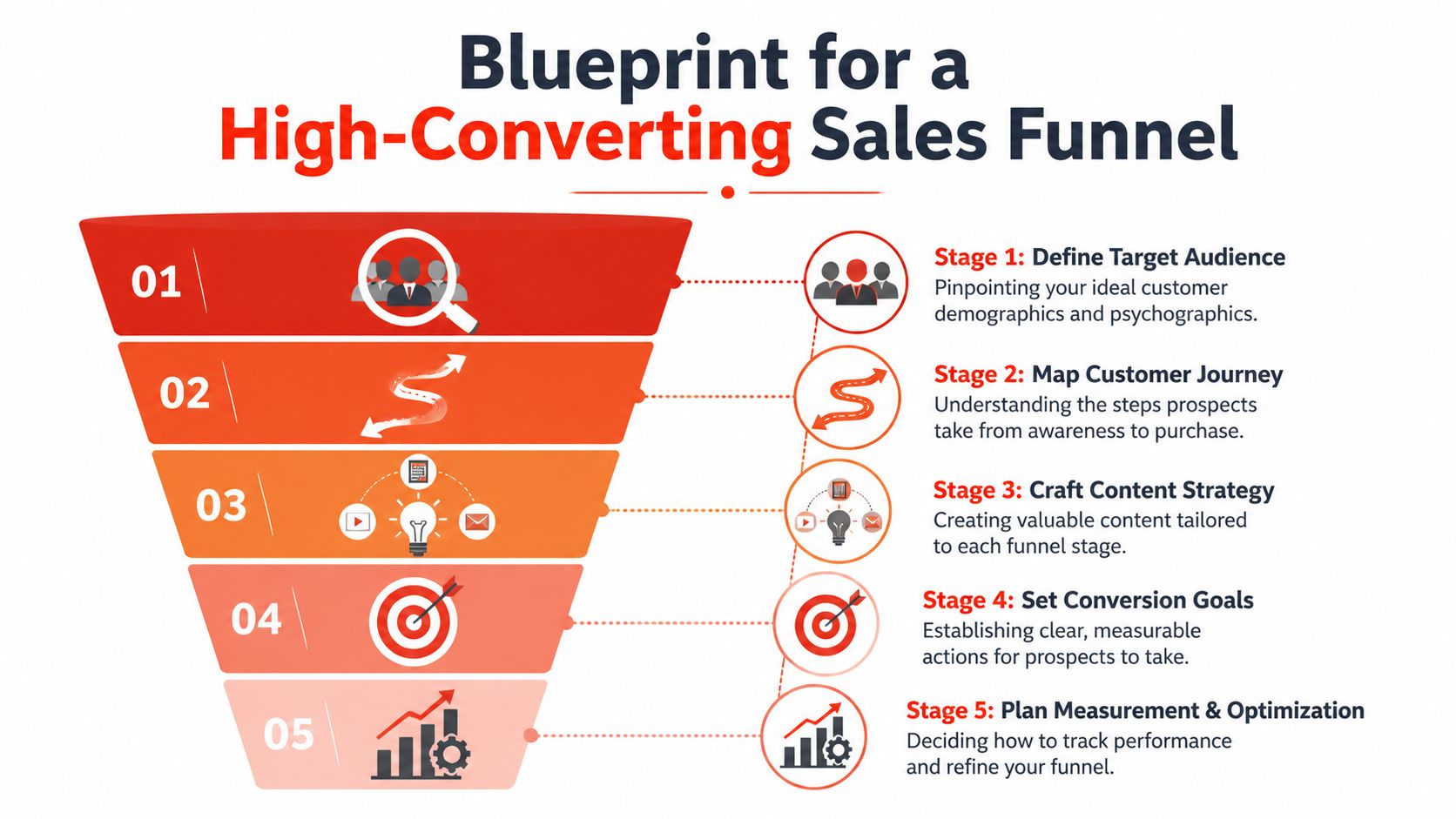
Once the goal is clear, map the journey using AIDA in a modern SMB context.
- Awareness means someone realizes your business may solve a problem they have.
- Interest begins when they spend time with your content, service pages, or educational assets.
- Desire develops when they can picture your offer solving their situation specifically.
- Action happens when they request contact, book time, start a trial, or ask for a proposal.
Many owners overcomplicate things at this stage. You don’t need a giant mural of every possible touchpoint. You need a realistic sequence of questions:
- How will the right people find you?
- What will make them stay?
- What information do they need before they’re ready to engage?
- What friction might stop them from taking the next step?
If you work in e-commerce or support online product sales, it helps to study examples of orchestrating e-commerce funnels so you can see how awareness, product education, and purchase intent connect across pages and channels.
Build personas from real data, not guesses
Practical funnel work separates itself from generic marketing advice.
According to Amplemarket’s guide to mastering sales funnels, building a high-converting sales funnel requires analyzing existing customer data across demographics and purchase behavior, then segmenting by behavior and psychographics. The same source also notes that advanced teams use AI-driven persona tools to synthesize survey responses and website behavior into dynamic profiles.
That means your persona shouldn’t read like this:
“Business owner, age 35 to 55, wants more leads.”
That’s too broad to guide anything.
A useful persona includes practical buying context:
- Role and responsibility. Who feels the pain first?
- Trigger problem. What event makes them look for help now?
- Buying friction. What makes them hesitate?
- Information preference. Do they need proof, speed, detail, or simplicity?
- Fit signals. What behaviors suggest they’re serious?
A simple planning standard
Before you build pages, ads, or automations, make sure you can answer these:
| Planning question | What a good answer sounds like |
|---|---|
| Who is this funnel for? | A specific buyer segment with a common problem |
| What action should they take? | One clear conversion goal |
| What will persuade them? | Content matched to their stage and objections |
| What should happen after they convert? | Routing, follow-up, and qualification rules |
Practical rule: If your team can't describe the buyer and the next step in one sentence, the funnel isn't ready to build.
Fueling Your Funnel with Strategic Content
A visitor clicks an ad, reads a blog post, skims your service page, then leaves without booking. In most SMB funnels, the problem is not traffic alone. The problem is that the content never helped that person answer the next buying question.
Content is what moves someone from mild interest to a real decision. If the message is too broad, people bounce. If the ask comes too early, qualified prospects hold back. If every page says the same thing, you learn nothing about intent.
That last point matters more now because a modern funnel should collect zero-party data as it converts. Good content does not just educate. It prompts useful signals through quiz answers, interactive tools, comparison choices, form selections, and reply behavior. Those inputs give your automation something real to work with later, instead of forcing sales to guess.
Match content to buying temperature
The AIDA model is still useful as a planning tool, but apply it with more precision than "awareness content at the top, sales content at the bottom." Each stage should answer a different question and collect a different kind of intent signal.
Top-of-funnel content should help a prospect name the problem. Use search-focused articles, service explainers, local pages, short videos, and practical educational pieces that meet people before they know your company. If you're building that layer deliberately, this guide on content marketing for brand awareness is a good reference for attracting the right audience instead of chasing empty traffic.
Middle-of-funnel content should help people evaluate fit. In this stage, comparison pages, buyer guides, checklists, webinar replays, and email sequences demonstrate their value. Done well, these assets also capture zero-party data. Which use case did they select? Which objection did they click on? Which result are they trying to get first? That information should feed your CRM and routing rules from day one.
Bottom-of-funnel content should remove friction and make the next step obvious. Pricing context, onboarding expectations, FAQs, proof assets, demo pages, consultation pages, and clear offer pages belong here. If a buyer is ready, do not make them hunt.
A useful reference for teams trying to scale this systematically is this guide to scalable content marketing strategies. It connects organic content production to funnel intent instead of treating SEO and conversion as separate projects.
Content and Touchpoints by Funnel Stage
| Funnel Stage | Primary Goal | Example Content/Touchpoint |
|---|---|---|
| Awareness | Attract relevant visitors | Blog posts, local SEO pages, social content, educational videos |
| Interest | Capture attention and context | Lead magnets, email signup offers, explainer pages, interactive tools |
| Desire | Build confidence and fit | Comparison pages, webinars, FAQs, nurture emails, service breakdowns |
| Action | Convert high-intent visitors | Pricing page, demo booking page, quote request form, consultation page |
What works for SMBs
You do not need a huge library to get results. You need a tight content set that matches buyer intent and gives your funnel better qualification data.
A practical starter set looks like this:
- One awareness asset tied to a specific buyer problem and search intent.
- One conversion page built around a single offer and one clear CTA.
- One decision-stage asset such as a comparison page, detailed FAQ, or service breakdown.
- One nurture path that follows up based on what the visitor told you, not just the page they visited.
Small teams can beat larger competitors. A focused funnel with four strong assets and clean automation usually outperforms a bloated content library with weak intent capture.
What usually fails
A few patterns waste budget and hide buyer intent:
- Sending paid or organic traffic to a generic homepage. Homepages rarely match the search, click, or pain point closely enough.
- Offering a lead magnet unrelated to the core sale. You may get more leads, but sales gets less useful conversations.
- Using one CTA for every visitor. A cold reader may want a guide. A warm prospect may want pricing or a call.
- Publishing educational content with no data capture. If readers consume the content and leave no signal, your automation has nothing to qualify.
Strong funnel content works like a guided sales conversation. Each asset answers the next obvious question and asks for one small action that reveals intent.
Automating Lead Qualification and Engagement
Traffic is expensive. Sales time is more expensive.
That's why lead generation alone isn't enough. If your funnel hands every inquiry to a human, your team spends too much time sorting instead of selling. The fix is automated qualification.
Why static forms hold SMBs back
Static contact forms treat every visitor the same. They ask for the same fields, in the same order, whether the person is ready to buy, casually browsing, or not a fit at all.
That creates three problems:
- You learn too little. Name, email, and message box rarely tell sales what matters.
- You lose momentum. Forms don't answer questions in real time.
- You create extra work. Someone on your team has to qualify after the fact.
For service businesses, agencies, consultants, and higher-consideration SMB offers, this is a weak handoff. The first interaction should gather context, not just contact info.
Use BANT as the screening logic
The classic framework here is BANT, which stands for Budget, Authority, Need, and Timeline. According to Crazy Egg's sales funnel guide, BANT is an industry standard for B2B qualification, and leads should only become prospects when they show both real interest and viable customer fit.
That last part matters. Interest alone isn't enough. A visitor can be curious and still be a poor use of sales time.
A modern funnel can use BANT-style questions without sounding robotic. You don't need to ask, "What is your budget?" in a stiff sequence. You can qualify naturally through questions about business size, problem urgency, current solution, intended use, or decision process.
The best qualification doesn't feel like interrogation. It feels like helpful guidance that reveals fit.
What automation should do for you
An automated qualification layer should handle tasks your team shouldn't repeat manually:
- Greet visitors immediately so they aren't left waiting.
- Ask specific questions based on page context or stated need.
- Branch the conversation depending on fit, urgency, or service type.
- Capture zero-party data that the visitor shares directly.
- Summarize the exchange so follow-up starts with context.
This is especially useful when you're also running paid acquisition. If you're sharpening upstream targeting, qualified prospect targeting for ad campaigns can help reduce the mismatch between the clicks you buy and the leads your funnel accepts.
Build the qualification path before you install the tool
The mistake isn't failing to automate. It's automating a messy process.
Before you deploy any AI assistant or conversational layer, write down:
- Disqualifiers such as geography, use case, or business type
- Priority signals such as urgency or project readiness
- Routing rules for sales, nurture, support, or self-serve content
- Required lead details your team needs before outreach
If you want the technical side of setup, this guide on how to create a bot is a useful implementation reference for turning those rules into a working on-site assistant.
Measuring Success with Sales Funnel Analytics
You launch a funnel, leads start coming in, and the dashboard looks promising. Then sales says the pipeline still feels thin, close rates stay flat, and no one agrees on where the problem sits. That is the point where analytics stop being a reporting exercise and start becoming an operating system.
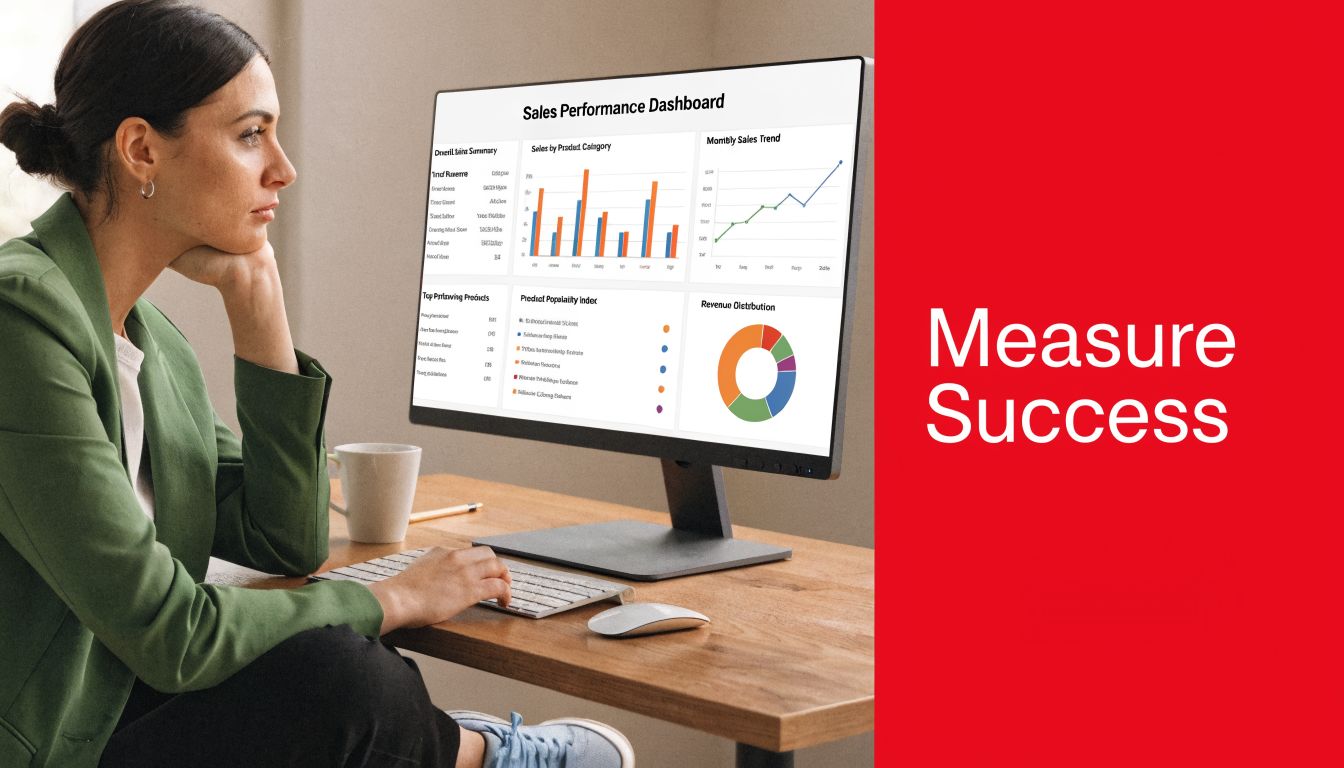
A funnel can look healthy while underperforming. More traffic does not always mean more revenue. More leads can hide weaker fit, longer sales cycles, or poor follow-up. If you do not measure each stage, you end up optimizing based on opinions instead of buyer behavior.
According to Statsig's perspective on funnel analytics metrics, only 1% to 3% of website visitors convert to leads without a structured funnel (source). Statsig also says businesses should track funnel conversion rate, lead qualification rate, and win rate, with a 10% target for overall funnel conversion, 40% as an aim for lead qualification rate, and a 21% global average win rate. The same source notes that MQL-to-SQL conversion in SaaS averages 15% to 25%, and that tracking it can reveal interventions that double performance.
For a modern funnel, those numbers matter most when you connect them to qualification quality. If you are using AI and automation from day one, do not stop at counting form fills. Measure which lead sources produce qualified conversations, what zero-party data people willingly share, and which combinations of signals turn into pipeline.
The five metrics that matter most
Use one operating dashboard your team can review every week. For most SMB funnels, these are the numbers worth watching first:
| Metric | What it tells you | Basic calculation |
|---|---|---|
| Funnel conversion rate | How efficiently traffic turns into leads or customers | Later-stage conversions divided by total earlier-stage visitors |
| Lead qualification rate | Whether your top-of-funnel is attracting the right people | Qualified leads divided by total leads |
| Win rate | How often qualified opportunities close | Closed deals divided by total opportunities |
| Average deal size | Whether the funnel is bringing in valuable business | Revenue divided by number of closed deals |
| Time to close | How quickly the funnel produces revenue | Average number of days from lead to closed deal |
The formulas are simple. The hard part is reading them in context.
A low conversion rate with strong qualification can be acceptable if you sell a high-ticket service. A high lead volume with weak qualification usually creates extra work for sales and hides a targeting problem upstream. I usually tell owners to protect sales capacity first. Ten qualified leads beat fifty weak ones every time.
How to diagnose funnel leaks
Patterns show up quickly when you review stage-by-stage performance instead of looking at totals.
- High traffic, low conversion rate usually points to weak message match, a poor offer, or a call to action that asks for too much too early.
- High lead volume, low qualification rate often means your content or ads are attracting curiosity instead of buying intent.
- Strong qualification rate, weak win rate usually points to pricing pressure, weak proof, slow follow-up, or a handoff problem between marketing and sales.
- Long time to close can signal unclear next steps, too much friction in the buying process, or nurture that does not answer the actual objections.
Watch the handoff: If marketing reports lead growth while sales rejects those leads, your qualification rules, routing logic, or offer framing probably need work.
Google Analytics can show entry paths, landing page drop-off, and conversion events. Your CRM should show which leads became real opportunities and revenue. If you want more visibility into identified visitors and behavior before a form submission, these website visitor tracking tools are a practical place to start.
A short walkthrough can also help if you want to visualize what a practical dashboard review looks like:
Don't track everything
Small teams get buried when every platform adds another report.
Start with one dashboard. Review it on a fixed cadence. Focus on stage conversion, qualification, wins, and sales speed first.
Then add one layer many funnels still miss. Track the zero-party data buyers share directly, such as budget range, timeline, use case, team size, or urgency. That information helps you judge lead quality faster, train your automation on real buying signals, and stay less dependent on fragile third-party tracking. A good analytics setup should help you decide what to change next, not just describe what already happened.
Advanced Funnel Optimization for 2026
A lot of SMBs head into 2026 with a funnel that still depends on the old playbook. They buy traffic, push visitors to a form, and hope retargeting fills the gaps. That model is weaker now, especially when tracking is less reliable and sales teams need better context than a name and email address.
The stronger approach is to build optimization around first-party and zero-party data from the start. According to Mountain's funnel-building analysis, privacy changes have reduced the value of third-party cookie tracking, while zero-party data collection through conversational qualification tools gives SMBs a better way to profile and score leads. The same analysis reports 4x higher conversion rates and 15% more lead retention for funnels that use this model instead of relying heavily on paid traffic.
That changes what optimization work should look like.
Instead of spending each quarter debating button colors or swapping templates, improve the parts of the funnel that help you identify buying intent earlier and route serious prospects faster. For most small teams, that means tightening the message, asking better qualification questions, and using automation to turn behavior into a usable lead profile before sales gets involved.
What to optimize now
Focus your optimization work on a short list:
- Landing page tests that isolate one meaningful variable at a time, usually the headline, offer framing, CTA, or qualification prompt
- Nurture flow revisions based on where qualified buyers stall, ignore follow-up, or ask the same question repeatedly
- Qualification question tuning so your sales team gets budget, timeline, use case, urgency, and fit before the first call
- On-site behavioral capture that combines page activity with declared intent to build a lead profile your CRM can use
- AI-assisted routing and follow-up so high-intent leads get a fast response and lower-intent leads enter the right nurture path automatically
The trade-off is real.
You will usually get less broad tracking coverage than you had in the era of aggressive third-party retargeting. In return, you get higher-quality information that buyers intentionally share. That data is more useful for qualification, more durable as privacy rules keep changing, and far easier for sales to act on.
A visitor who tells you they need help in the next 30 days, has a defined budget, and wants support for a five-person team is easier to prioritize than someone who triggered a pixel on three blog posts.
The future-proof funnel collects useful, consent-based information early and uses automation to turn it into action.
Teams that outperform in 2026 will not treat AI and automation as add-ons for later. They will build the funnel around them from day one, using conversational qualification, lead scoring, routing logic, and zero-party data capture to improve conversion quality, not just lead volume.
If you want a faster way to put this into practice, LeadBlaze gives you a 24/7 AI sales assistant that engages website visitors, asks qualification questions, captures zero-party data, and delivers concise lead summaries instead of vague form submissions. It's a practical fit for SMBs, agencies, and service businesses that want a modern funnel without building a complex system from scratch.