Automated lead generation software is what turns your website from a passive brochure into an active sales machine. It’s the technology that swaps out those old, static contact forms for smart, 24/7 conversations, making sure you never miss a chance to connect with a potential customer.
Moving Beyond Static Forms to Smart Conversations
Think about your website’s typical “Contact Us” form. It’s basically a digital suggestion box. Someone drops in their details, hopes for the best, and waits. Maybe for hours, maybe for days.
Now, imagine that same visitor is instead greeted by a digital concierge—one that’s always on, ready to welcome them, figure out exactly what they need, and point them in the right direction, all in a matter of seconds. That’s the leap from just collecting data to actually engaging with people.
This is what automated lead generation software does. It acts like an intelligent sales assistant for your website. Instead of making potential customers wait around, this technology jumps in right away to answer questions and gather important info on the spot. It’s the difference between a storefront with the lights off and one with a helpful expert ready to chat.
The Problem with the Old Way
The traditional approach—relying solely on contact forms—is full of friction and missed opportunities. It’s a leaky bucket for your sales pipeline.
- Delayed Responses: The clock is always ticking. Research has shown that getting back to a lead within the first five minutes can massively boost your chances of converting them. A static form all but guarantees you’ll miss that critical window.
- Lack of Qualification: A name and an email don’t tell you much. Is this person a serious buyer or just kicking tires? Your sales team ends up wasting precious time chasing down leads that were never a good fit to begin with.
- Poor User Experience: People are impatient. If they can’t get a quick answer on your site, they’ll bounce and head straight to a competitor who can help them faster.
A Smarter Approach to Engagement
Modern automated tools, like a sophisticated chatbot for your website, fix these issues by starting a conversation immediately. They act as a smart filter, asking the right qualifying questions before a lead ever lands in your team’s inbox.
This isn’t just about capturing leads; it’s about nurturing them from the very first click. When you provide instant, helpful interaction, you build trust and create a smooth experience, ensuring the leads you pass to your sales team are actually ready to talk business.
In this guide, we’ll walk through how to put this technology to work for you. It’s time to stop letting valuable traffic slip away and start turning your anonymous visitors into real, high-quality sales opportunities.
How Automated Lead Generation Software Actually Works
So, what’s really going on under the hood? To get a clear picture, stop thinking of a static contact form and start imagining a smart, 24/7 concierge for your website. This software doesn’t just sit there waiting for someone to fill it out; it actively engages every single person who drops by.
It’s the difference between a sign in an airport that just points to a gate and a helpful concierge who asks, “Where are you headed? What do you need?” and then personally walks you in the right direction. The software does this for your digital visitors, turning casual browsers into genuinely qualified prospects.
From First Click to Qualified Lead
The whole process kicks off the moment someone lands on your page. The software doesn’t wait for a visitor to hunt down a “Contact Us” button. Instead, it proactively starts a conversation with a personalized welcome, bringing the engagement directly to them.
From there, it’s all about qualification. Using a series of smart, pre-programmed questions, the software figures out a visitor’s needs, their budget, and how soon they’re looking to buy. This is a game-changer because it filters out the curious onlookers from the serious buyers, meaning your sales team only talks to people who are a real fit.
The real magic is in the data it gathers. This isn’t just about grabbing a name and an email. The software learns about a prospect’s specific problems and goals through natural conversation, giving your team a ton of context before they ever pick up the phone.
To dig deeper into the nuts and bolts of the technology, check out this comprehensive guide on AI for B2B lead generation.
The Role of Artificial Intelligence
Artificial intelligence is the brain behind the operation, making these digital conversations feel surprisingly human. The AI essentially “reads” all the content on your website—from blog posts to service pages—so it can give smart, relevant answers to a visitor’s questions. This builds trust right from the start.
Finally, the software nails the handoff. Once a lead is qualified according to the rules you’ve set, it’s instantly routed to the right person on your team. No more leads getting lost in an inbox or going cold. This quick, seamless transfer makes a huge difference in your conversion rates.
To make this distinction clearer, let’s compare the old way with the new way.
Manual Lead Capture vs Automated Lead Generation
| Aspect | Manual Process (Static Forms) | Automated Software (AI Assistants) |
|---|---|---|
| Visitor Interaction | Passive; visitor must find and fill out a form. | Proactive; software initiates a conversation. |
| Qualification | None. All submissions are treated equally. | Dynamic; asks qualifying questions in real-time. |
| Data Captured | Basic contact info (name, email, phone). | Rich contextual data (needs, budget, timeline). |
| Response Time | Delayed; depends on manual follow-up. | Instant; 24/7 engagement and lead routing. |
| Lead Quality | Mixed; includes spam and unqualified inquiries. | High; filters out tire-kickers and low-fit prospects. |
| Sales Team Effort | High; team spends time sifting through all leads. | Low; team focuses only on pre-qualified leads. |
The table really highlights the jump from a simple data collection tool to a sophisticated sales assistant.
This flowchart shows exactly how that evolution from a passive form to an active, software-driven conversation plays out.
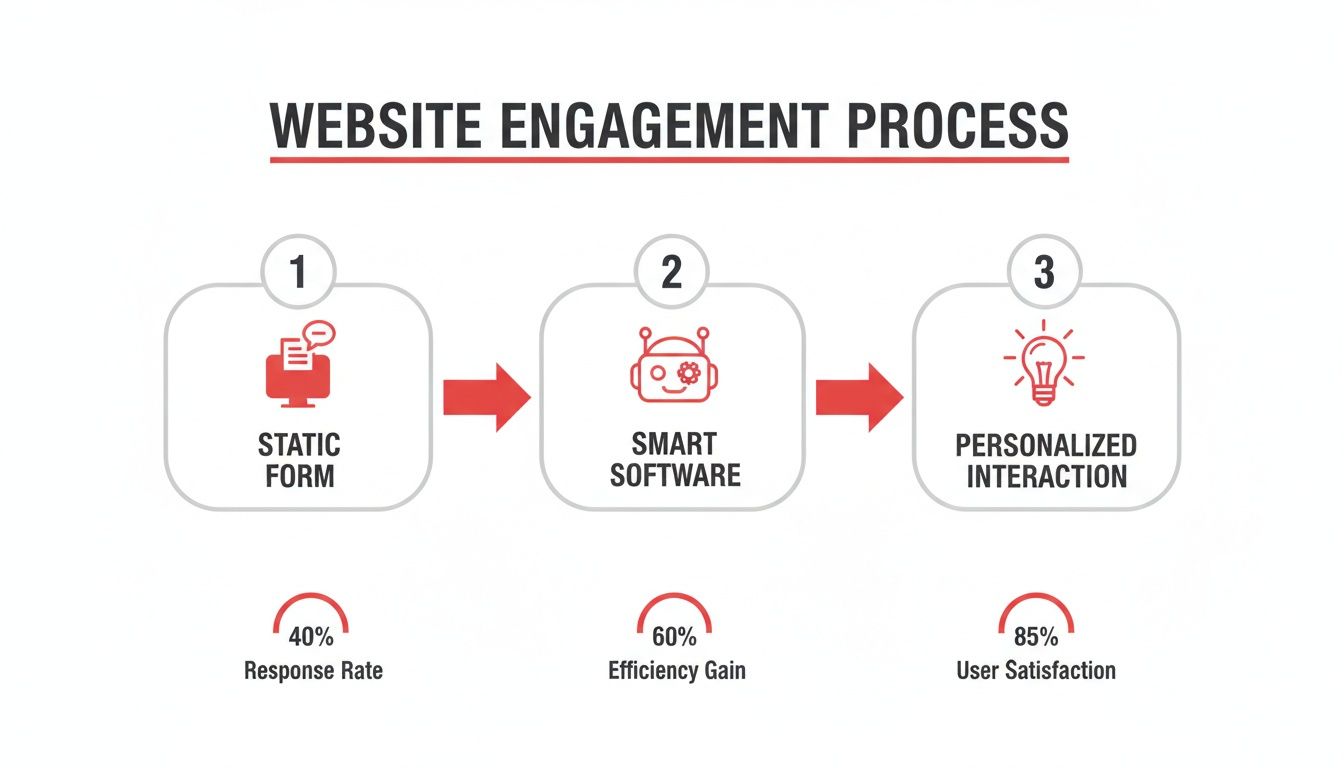
This isn’t just a nice-to-have upgrade; it’s a fundamental shift in how businesses connect with potential customers. The numbers back this up, too. The lead generation solutions market is expected to jump from $3.1 billion to over $15 billion by 2031. Right now, more than 64% of marketers are already using automation to get ahead. It’s clear that businesses automating their lead capture are the ones setting themselves up for success.
What to Look for in a High-Performing Automation Tool
Not all lead generation tools are created equal. On the surface, many platforms look pretty similar, but the difference between a good tool and a great one comes down to a handful of features that directly impact your bottom line. It’s like choosing between a basic home toolkit and a professional mechanic’s set—both have wrenches, but one is built for serious power and efficiency.
To turn your website into a genuine lead-generating machine, you need more than a simple pop-up or a basic chatbot. The right software brings together a suite of smart features that work in concert to engage visitors, qualify prospects, and then seamlessly hand them off to your sales team.

Core Capabilities You Can’t Do Without
The best software doesn’t just add features for the sake of it. Every capability is tied to a real business benefit, saving your team time and boosting the quality of your leads. Here are the non-negotiables to look for.
24/7 Automated Engagement: Your office might close at 5 PM, but your website is always open. A must-have feature is the ability to instantly greet and interact with every single visitor, day or night. This ensures you never miss an opportunity just because your team is home for the evening.
Customizable Qualification Logic: Think of this as your digital bouncer. It lets you set specific rules to automatically filter out inquiries that aren’t a good fit. For instance, a local plumbing company can set a rule to disqualify anyone outside its service area, saving the sales team hours of sifting through irrelevant contacts each week.
Seamless CRM Integration: Your automation tool should reduce your workload, not add to it. The best software connects directly with your existing Customer Relationship Management (CRM) system. It automatically pushes qualified leads and all their conversation data right into the CRM, completely eliminating manual data entry.
The real goal here isn’t just to automate tasks; it’s to build an intelligent system that makes every lead more valuable. When your tool can qualify a prospect and instantly sync their entire interaction history to your CRM, your sales team gets all the context they need to have a much smarter, more effective first conversation.
Advanced AI-Powered Functions
Moving beyond the basics, modern tools use artificial intelligence to add a layer of sophistication that truly makes a difference. These aren’t just flashy add-ons; they turn simple visitor interactions into powerful business intelligence.
One of the most impactful features is conversational AI that understands natural language. This means the software can figure out what a visitor is asking in their own words and pull relevant, helpful answers directly from your website’s content. It’s a huge step up from rigid, scripted chatbots and helps build trust from the very first click.
Also, keep an eye out for AI-powered lead summaries. Instead of dumping a long, messy chat transcript on your sales team, the software analyzes the entire conversation and spits out a neat, concise summary. This brief highlights the prospect’s main pain points, budget, timeline, and any potential red flags. That small feature alone gives your team instant context, dramatically improving their prep time and follow-up effectiveness.
The Real-World Business Impact of Automating Lead Generation
It’s one thing to talk about software features, but what really matters is how those features translate into actual business results. Let’s move past the technical “how” and dig into the tangible impact this kind of automation can have on your efficiency and, most importantly, your bottom line. This is where cool tech becomes real revenue.
The first and most powerful benefit you’ll see is a serious bump in lead conversion rates. Think about it: when someone lands on your site with a question, they want an answer now. If they have to wait, they’re gone—straight to your competitor. An automated assistant engages them instantly, providing answers and building a positive first impression that keeps them on your site and guides them toward becoming a lead.
This immediate engagement also dramatically shortens the sales cycle. The software can qualify prospects in real-time, asking the right questions about their needs, budget, and timeline. By the time a lead gets to your sales team, it’s already warmed up and vetted. This lets your reps skip the time-consuming initial back-and-forth and jump straight into meaningful conversations with people who are actually ready to buy.
Fueling Growth with Better Data and a More Productive Team
Beyond just getting more leads, automation sharpens the quality of those leads. The software acts like a smart filter, making sure only prospects who match your ideal customer profile make it through to your sales team. This kind of precision is exactly why so many businesses are making the switch.
Marketers, in particular, get it. Recent data shows that 61% of marketers are focused on increasing lead generation, and 57% are looking to improve lead nurturing with automation. The proof is in the results: B2B marketers using automation see their sales pipeline contribution jump by an average of 10%. You can explore more of these compelling marketing automation stats over at emailmonday.com.
The ripple effect here is huge. When you take manual data entry and repetitive qualification tasks off your team’s plate, you free them up to do what they do best: build relationships and close deals. It’s not just a small tweak to their workflow; it’s a genuine strategic advantage.
And the benefits don’t stop there. Over time, they compound:
- Consistent Brand Messaging: Your core brand message is delivered perfectly, 24/7, every single time. No off days, no mistakes.
- Deeper Customer Insights: Every single conversation is a goldmine of data. You can analyze these interactions to uncover common pain points, popular questions, and new market trends.
- Effortless Scalability: As your website traffic grows, the software scales right along with it. You can handle a massive influx of inquiries without having to hire more people.
In the end, automated lead generation software is much more than a simple tool for collecting emails. It’s a powerful engine for driving revenue, boosting team efficiency, and making smarter, data-driven decisions for your business.
How to Choose and Implement Your First Automation Tool
Jumping into automated lead generation software can feel like a huge leap, but breaking it down makes it much more manageable. Think of it as a two-part mission: first, you pick the right partner for the job, and then you give them a clear set of instructions. Nailing both of these is the secret to a smooth and successful launch.
The whole point is to find a tool that fits your business like a glove, not the other way around. You definitely don’t need some beast of a system that requires a developer on standby. Look for a solution that feels approachable and takes the technical stress off your plate.
Finding the Right Software Partner
Your main goal here is to find a tool that genuinely makes your life easier. Before you sign up for anything, run your top contenders through a simple checklist to make sure they tick the most important boxes.
- Ease of Use: Can you actually install it yourself? Look for simple one-click plugins or a little code snippet you can pop onto your site in a few minutes. No coding degree required.
- Transparent Pricing: Stay away from unpredictable per-lead or per-conversation costs. Those models basically penalize you for being successful. A flat, predictable monthly fee is way better for budgeting, especially for smaller businesses.
- Key Integrations: Does it play well with the other tools you already rely on? A smooth connection to your CRM is a must-have, as it cuts out the soul-crushing task of manual data entry.
- Quality Customer Support: When you hit a snag or just have a question, you need a real human to talk to. Prioritize companies that offer direct, hands-on support to help you get everything set up just right.
If you want to see how different options stack up, our guide on the top AI lead generation tools is a great place to start your research.
Your Four-Step Implementation Roadmap
Once you’ve picked your software, getting it live is a straightforward, four-step process. The whole thing is designed to get you results fast without creating a headache.
This isn’t some massive technical project. It’s more like teaching a new digital assistant how to talk like your brand and what a “good lead” actually looks like. Spending a little time on this upfront will pay you back in spades.
Just follow this simple roadmap to get going:
- Define Your Lead Goals: First things first, decide what makes a lead “qualified” for your business. Is it someone with a certain budget, a specific company size, or an interest in a particular service? Set these rules up inside the software.
- Configure Your Brand Voice: This is the fun part. Customize the welcome messages, questions, and responses to match your brand’s unique personality. This ensures every interaction feels authentic and not like talking to a robot.
- Test the User Experience: Before you unleash it on the world, take it for a test drive yourself. Pretend you’re a new visitor to your site. Does the conversation flow naturally? Does it feel helpful?
- Monitor and Gather Insights: After you go live, keep an eye on the dashboard. This is your command center where you’ll see all your new leads roll in and, just as importantly, learn what your audience is really asking about.
Measuring Success and Calculating Your ROI

Once you’ve got your automated lead generation software running, the real work begins: proving it was worth the investment. Without the right numbers, you’re flying blind. Measuring success is about more than just a growing contact list; it’s about connecting the dots between the software, your bottom line, and justifying the expense.
To get a clear picture, you have to track the key performance indicators (KPIs) that actually matter. These metrics tell the real story of how the software is performing and give you the hard data needed to calculate a real return on investment (ROI).
Key Performance Indicators to Track
You need to know what’s working and what isn’t, from the moment a visitor lands on your site to the second a lead gets handed off to sales. Most of these can be monitored using standard website visitor tracking tools.
Here’s where to start:
Lead Conversion Rate: What percentage of your total website visitors are turning into actual leads? This is your front-line metric, telling you how well the software is grabbing attention and pulling prospects into your funnel.
Lead Qualification Rate: Of all the leads captured, how many actually meet your criteria? A high number here is a great sign. It means your system is doing its job filtering out the fluff so your sales team can focus on real opportunities.
Cost Per Qualified Lead (CPQL): This one is simple but powerful. Just divide your monthly software cost by the number of qualified leads it delivered. This number puts a clear price tag on every high-quality prospect you generate.
Consistently watching these KPIs is the difference between just using a tool and managing a strategic asset. The data will show you what’s hitting the mark and where you can tweak your rules for even better performance.
Calculating Your Return on Investment
Figuring out your ROI doesn’t require a degree in finance. At its core, it’s about a simple comparison: how much money did you make versus how much did you spend? For more advanced financial modeling, you can dig into guides on mastering marketing automation ROI.
Here’s the basic formula to use:
(Revenue from Automated Leads – Software Cost) / Software Cost = ROI
Let’s put it into practice. Say the software costs you $49/month, but it helps you close deals worth $1,000 in new revenue. Your ROI would be a staggering 1,940%. When you can show numbers like that, the software stops being an expense and becomes a clear-cut revenue machine.
Common Questions About Automated Lead Generation Software
Thinking about bringing in an automated tool to handle your lead generation? It’s natural to have a few questions. Many business owners I’ve talked to are worried about losing that human touch or getting stuck in a technical mess. Let’s walk through some of the most common concerns so you can feel good about your decision.
“Will This Make My Business Sound Like a Robot?”
This is probably the number one hesitation I hear, and it’s a valid one. You’ve worked hard to build a brand with a specific personality, and the last thing you want is an impersonal AI assistant scaring away potential customers.
But modern tools are much smarter than you might think. They’re designed to be customized. You can dial in the exact tone, voice, and personality that matches your brand. The AI actually learns from your website’s content, so it can provide answers that are not only accurate but also sound like you.
The goal isn’t to fool anyone into thinking they’re chatting with a person. It’s about giving them what they need—instant, helpful answers—at any time of day or night. Honestly, that creates a much better first impression than making them fill out a form and wait for a response.
“Is This Software Difficult to Set Up?”
Another big worry is the tech side of things. Most people hear “AI software” and immediately picture needing a team of developers just to get it running.
Thankfully, that’s not the case here. The best platforms are built for business owners, not coders. Many offer simple one-click installs for sites like WordPress, or you can just copy and paste a small snippet of code onto your site. It literally takes minutes.
From there, you manage everything from a simple dashboard where you set up your lead qualification rules, check on new leads, and see how everything is performing. No coding required.
The best platforms understand that small business owners are busy. They prioritize a user-friendly experience and offer direct support to make the entire setup process smooth and painless from start to finish.
“How Much Does This Software Typically Cost?”
Alright, let’s talk about the bottom line. What’s the real investment here?
Pricing can be all over the map. Some companies will charge you for every lead or even every conversation, which can get unpredictable and expensive fast, especially as your traffic grows. A much better model, especially for small to mid-sized businesses, is a flat monthly fee.
This kind of predictable pricing means you can engage every single person who visits your site without watching the clock or worrying about surprise overage fees. My advice? Always look for a provider that offers a free trial. It’s the best way to see the value for yourself before you commit.
Ready to stop missing out on valuable website leads? LeadBlaze acts as your 24/7 AI sales assistant, turning casual visitors into qualified prospects automatically. Start your free trial today and see how easy it is to grow your business at https://leadblaze.ai.